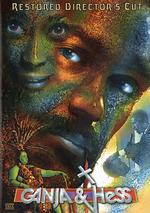
Ganja & Hess
Picture: C
Sound: C Extras: B Film: B+
Ganja & Hess (1973) is an amazing low budget
Horror film that is filled with elements of Vampirism, the occult, and a
struggle between Christianity in the Western (read white) and African (read
black) worlds. There are the white
churches and their take on Christ, as well as the Baptist take that is
primarily African-American. In addition
to this simple duality is the additional hauntings of Voodoo and even
Catholicism that run throughout this film.
Dr. Hess Green (Duane Jones of George Romero’s original
1968 Night of the Living Dead) is stabbed under strange circumstances,
by an ancient African dagger relic, suddenly gets a thirst for blood, and can
remain immortal except for the quenching that one appetite. Or at least that seems to be the case in the
beginning. Besides the struggle between
the various religious movements from thousands of years of Christianity, there
is the doctor’s murder of George Mead (the film’s writer-director, Bill
Gunn). This brings the arrival of his
wife Ganja (Marlene Clark), who starts to fall for the doctor, despite demands
about the whereabouts of her husband.
Logic gives way to the supernatural throughout the film in
a way that is sudden, creepy, yet ultimately makes sense. The acting is not bad either, thanks to
Gunn’s tight ideas about what he is doing.
This film was butchered into at least six other known versions that could
not have made any sense, but it is now the way the late Gunn intended it. It is a lost classic of authentic Black
cinema in the United States and a Horror gem that manages to dodge the
so-called “Blaxploitation” cycle altogether, though several of those senseless
versions tried hard to make it fit that mode.
The anamorphically enhanced 1.85 X 1 image is from various
materials in 35mm or Super 16mm. It was
Super 16mm that the film originated in and cinematographer James Hinton did an
amazing job with stocks of the time in capturing the fictional tale. Super 16mm was new at the time, but a step
above the 16mm that was being used on many a documentary and Rockumentary. Though quality varies at times, the
interesting choices of color, the open spaces, and unusual angles add up to a
very visually memorable experience. The
print materials show their age. It can
be said that the film had somewhat of an influence on Stanley Kubrick’s two
tales of domestic horrors: The Shining (1980) and Eyes Wide Shut
(1999), but you can judge for yourself.
The Dolby Digital 2.0 is Mono for the film, while Stereo
for the commentary track. Though it is
not known if any of the music exists in stereo, the sound was recorded on
location for a majority of the film and the persons involved in restoration
have kept it in its original mono. That
location recording has some minor problems.
The combination of music score and sound effects design is remarkable
and will make you wish the film was stereo, but it is extremely effective in
either case. This reconstruction job is
good enough to be very effective. Together,
sound and picture, along with its various elements, averages out. With the advances in restoration,
photochemical and digital, it will be interesting to see what happens when this
gets issued in high definition and future 35mm theatrical releases.
This DVD and restoration was issued back in 1998, so the
fact that it holds up all these years later is impressive. Add the smart commentary, 1991 Video
Watchdog essay by Tim Lucas & David Walker, plus the photo gallery, and
you get a well-rounded DVD that is a must for any Horror collection. Especially considering how extremely
under-seen this full-length cut is, this film deserves a total rediscovery on
its 30th Anniversary.
- Nicholas Sheffo