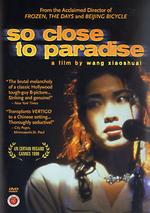
So Close to Paradise
Picture: C- Sound: C Extras: C Film: B-
Gangster genre films have
always had a home in cinema even from the beginning of the medium. It has evolved, changed direction, been
presented silently, or even in full-blown color. Sometimes we are introduced to heroes, often times villains and
in most cases there are gray areas where characters never seem to settle on one
particular ‘type’. Newer American
audiences are more familiar with what directors such as Martin Scorsese has
done in the case of Goodfellas (1990) or Brian DePalma’s The
Untouchables (1987). However, Asian
cinema has always had a separate direction from which it transformed the genre
as we see here with So Close to Paradise (1998) a film from one of the
more notoriously known ‘underground’ directors Wang Xiaoshuai.
Wang is one of China’s
leading filmmakers and helms this particular film with the mindset of the
typical Hollywood B-movies from the 1940’s and 1950’s. Particularly the influence came from directors
such as Anthony Mann, who’s T-Men (1947) and his Raw Deal (1948),
certainly come to mind here. Mixing
these old styles with some of the more recent directors such as Wong Kar-wai in
terms of the visual style. Most
obviously is Kar-wai’s Chungking Express (1994).
The storyline here can be
somewhat vague at times. We are
introduced to two boys named Gao Ping and Dong Zi. They recently move into the city from the country to try and start
‘new lives’. How many times have we all
heard about this one? Ping however
starts getting involved with all the wrong people, dealing with crime,
gangsters, and a whole slew of other problems, which lead him into kidnapping
Ruan Hong, a nightclub singer. What
Ping did not expect was to fall in love with Hong, but his problems run much
deeper.
Another resemblance with
this film especially with some of the strange contrasts in lighting, set
design, and naturalness is that of Japanese filmmaker Seijun Suzuki. Two of his gangster driven films Tokyo
Drifter (1966) and Branded to Kill (1967) are exceptional examples
of the influence of Asian culture into the twisted world of this genre as well
as breaking all the rules. Although So
Close to Paradise is nowhere near the caliber of these films it certainly
has some excellent qualities that put it on the map.
First Run Features DVD has
presented the home viewer with a decent quality DVD of this film presenting the
film in its original full-frame aspect ratio.
Since this film was mainly shot with very natural lighting and relies
mostly on only natural light for its source many of the scenes suffer in terms
of quality. Even the audio, which is a
mono sounding Dolby Digital Stereo mix, shows the limitations of the films
recording abilities especially in enclosed areas.
Xiaoshuai mentions on the
text interview included in the bonus section of the DVD that a few years back
it was nearly impossible to make underground films in China simply because
there was no money out there without going through the Chinese studio system. Sounds similar to Hollywood. Now it is somewhat more common to do films
around that system, but once again the budget becomes restricted. So Close to Paradise was even banned
for 3 years in China, which is a shame! The title of this film is reminiscent of
the ironically titled Children of Paradise (1946), which is also
reviewed on this site. The ironic
nature of course applies to the fact that paradise is always one step in the
opposite direction that our characters always seem to be going.
Although this film covers
over ground covered many times before it is well worth a viewing. In fact, even some of the technical flaws
both in the film and with the DVD never make for a distracting viewing as long
as you enter into this film knowing some of the limitations that lay before
you. If you are a fan of the
gangster/noir genres and enjoy seeing different takes on that especially to the
degree that some of the blaxploitation films of the 1970’s did in the case of Larry
Cohen’s 1973 film Black Caesar or Barry Shear’s 1972 superb film Across
110th Street featuring Anthony Quinn and Yaphet Kotto.
- Nate Goss