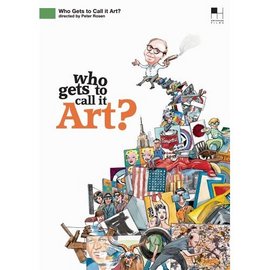
Who Gets To Call It Art? – A Film About Henry Geldzahler
(Arthouse Films)
Picture: C+
Sound: C+ Extras: C+ Documentary: B
One of the most interesting things that can happen is when
you are talking to supposedly intelligent people who you expect are adults and
a conversation ensues. You talk about
whatever you talk about, the responses are good to various topics, then the
conversation turns to the arts. On more
than a few occasions, this critic has run into a sadly predictable response
when putting out the idea that something has artistic value, especially being a
critic. “What is art?” As soon as you hear that, you know you are
dealing with someone who is a) an idiot, b) a jackass and c) not as intelligent
as you first thought. You get treated
like a & b, but should realize you are either dealing with someone who
hates the arts, hates you or has a dark, gutted out, bankrupt agenda. That is one of the reasons why having a
documentary called Who Gets To Call It Art? intrigued me in this time of
political correctness and retro-fascism.
Instead of someone talking down to you like you just came
off the boat and could not express or articulate yourself or just have people
thinking they can Forest Gump their way though the arts or very heavily related,
individualistic expression that whole new groups of extremists are embracing
with a new vigor as exemplified by the above.
Director Peter Rosen covers the new post-WWII art movement in New York
and how it went from abstract painters (Jackson Pollack and David Hockney, the
latter who is interviewed and is partly the subject of A Bigger Splash,
reviewed elsewhere on this site) to Pop artists. Instead of focusing on a specific artist, he tells us about Henry
Geldzahler, who turned out to be a manager, curator, visionary and juggler of
the latter movement as it eclipsed the abstract movement.
There were dozens of artists responsible for the movement,
but it is when Roy Lichtenstein and Andy Warhol show up as the ultimate names
in the movement, Pop Art is solidified and it turns out Geldzahler saw it
coming and understood where he and the others were coming from and where they
were going. As a result, he became the
dean and coordinating visionary. Warhol
even did a film about him and others did drawings and sketches since it turns
out Geldzahler loved to pose for them.
I give Rosen credit for getting to the point in the 80
minutes he has, though more interviews are in the extras, he has to make some
tough decisions and the result is a fine work about how important American art
became to the world at that time. Pop
Art was groundbreaking, shook the art establishment forever and still remains
with us to this day. Sure, there is
more story to tell, including about some female artists, but it is ironic that
Geldzahler is criticized for the same thing then Rosen is now for not being
all-inclusive. Unless you are dealing
with The Internet as your outlet, that is unavoidable, but some people will
complain about anything and be very miserable to boot, whether they really like
art or not.
The letterboxed 1.78 X 1 image is varied, but has some
good moments and the better shots would have benefited from anamorphic
enhancement. The Dolby Digital 2.0
Stereo is solid, but has few surrounds to offer. Extras include a silent “happening” film called Fotodeath,
the original theatrical trailer for this & a few other Palm releases,
weblinks, additional artists interviews and an audio Q&A session with
director Rosen & guests artists James Rosenquist and Larry Poons following
the New York premiere on February 1, 2006.
This is one of several strong titles from the Arthouse Films label,
including these great titles reviewed elsewhere on this site:
The Impassioned Eye – A Film About Henri Cartier-Bresson
http://www.fulvuedrive-in.com/review/3970/The+Impassioned+Eye+–+A+Film
William Eggleston In The Real World
http://www.fulvuedrive-in.com/review/3971/William+Eggleston+In+The+Real
- Nicholas Sheffo